One of the privileges and pains of pastoral ministry is walking with dear friends as they face seasons of suffering and challenge. Sometimes these seasons are accompanied by a nagging, unshakable sense of sadness. Despite their attempts to declare truths to themselves, to read the Word, to pray, the sense of sadness persists and the experience of joy and peace is elusive.
I have seen a few comforts benefit those in the midst of this season. One, is the awareness that God's love is still true even when we aren't feeling the reality of it. (Note to remember, trying to force this truth on a person in the midst of suffering is very difficult--the best care for suffering happens before suffering begins.) Another support is the blessing of friends who are willing to listen. Often times the greatest gift a friend can offer in theses seasons is the willingness to hear the sorrows and confusion and difficulty without judgment and with minimal counsel. In certain moments, nearness, listening, and and the genuine promise to pray are the best friendly support. A third support is unexpected encouragement. In the midst of the darkness, a short text message, phone call, email, or note can feel like a brief ray of sunlight breaking through the clouds. Sometimes separating encouraging words of faith from the listening opportunity is the right strategy, since the friend may only have enough faith to either express their struggles or hear encouragement, but only one at a time.
One last gift of support can be to point out Scriptures that highlight God's invitation for us to pray out our struggles to him. Psalm 88 is the most extreme example of this that I know. After calling God the "Lord, the God of my salvation" the psalmist spends the next 17 verses pouring out his struggles to the Lord. The Psalm does not end in a statement of confidence. It seems that the Psalmist only has enough faith to pray his struggles. I've found that there are regular moments in the midst of a spiritual season of darkness when this is the most that a saint can do. They may not be full of confidence and even expressing confidence may be too much for their souls. But if they can at least pray the reality of their struggles and believe that God is hearing them, then they are still facing in the right direction. I am so grateful for Psalm 88 and other similar passages. God is gracious enough to receive prayer that is only an acknowledgement that we are struggling with His providence. Only grace hears a prayer like that.
May any who are caring for God's people be given skill to lift up the downcast and bring light to those with clinging darkness.
Thursday, June 21, 2012
Wednesday, June 20, 2012
Serving at Home
The day is over and I'm heading home soon. I'm tired, but feeling satisfied after a long day of productive work. Because it was such a productive day, my thoughts turn to how nice it would be to rest and recuperate once I arrive home--perhaps enjoy some entertainment and stress free time after I've faced all the burdens of the day. I even feel a bit entitled to enjoy this down time, since I paid for it through a number of emails, conversations, hard thinking, and effort exerted throughout the day. But there is something else to consider. At home there are three children waiting for me, waiting to play and talk and listen to Daddy. The moment I walk through the door they desire my affection, leadership, instruction, care, fun. My wife is also waiting--after battling with toddler attitudes and 5 year old questions and infant screams all day long. She would love to have just a few moments without a baby in one arm and a cooking utensil in another. She would love to enjoy some adult conversation. Most importantly, my Lord is sending me home, and he has a purpose for me to accomplish. He has called me to serve and care and love and encourage and support. He will provide rest when the time comes. But my day isn't over yet.
Help me, Lord, to serve at home.
Help me, Lord, to serve at home.


Tuesday, June 19, 2012
Tempted in Every Respect
The fourth chapter of Hebrews says that the Lord Jesus was tempted in every respect as we have been, yet without sin. That means that none of my temptations are truly unique, that I am not facing something that hasn't been faced before. To believe that my situation is unique is perhaps the first step toward succumbing to unbelief, and sin, and eventually hardness of heart. Yet if my Lord has already faced this situation then I know he has the perfect grace available to help me endure and overcome. I know that He knows exactly what I feel and what I need and is ready to provide mercy and grace precisely fit for me.
Wednesday, June 6, 2012
Every Need
There is no need I have that God doesn't see. There is no weakness I have that God doesn't perceive. He is my strength, my hope, my security, my foundation, and my refuge. The certainty of his wisdom means that all that befalls me has been organized according to infinite knowledge applied to the perfect outcome for my life and his glory. The certainty of his power means that no power of hell or scheme of man, nothing in heaven or earth, isn't his tool working, whether willing or unwilling, to accomplish my good and his glory. The certainty of his love means that his wisdom and power are directed for me and not against me, for my good and not for my destruction. His wisdom, power, and love assure me despite confusion, weakness, need, uncertainty, and fainting of heart. He is all that I need.
Saturday, June 2, 2012
How Pastor-Counselors Differ from Secular Counselors
JUN
02
2012
JUSTIN TAYLOR|9:42 AM CT
How Pastor-Counselors Differ from Secular Counselors
David Powlison’s essay “The Pastor as Counselor” is far and away the best thing I have ever read on the role of pastor-elders in counseling God’s people. It is published in For the Fame of God’s Name and is available to subscribers of CCEF’s The Journal of Biblical Counseling. We have read through it together as an elder council, and I’d encourage other churches to do the same.
Here is one section directed to pastors on their unique role in counseling:
The uniqueness of your message is easy to see. But you already know this. I won’t rehearse the unsearchable riches of Christ, or the 10,000 pertinent implications.
But I do want to note the uniqueness of your message by contrast. Every counselor brings a “message”: an interpretation of problems, a theory that weighs causalities and context, a proposal for cure, a goal that defines thriving humanness. How does your message compare with their messages? Simply consider what our culture’s other counselors do not say.
They never mention the God who has a name: YHWH, Father, Jesus, Spirit, Almighty, Savior, Comforter.
They never mention that God searches every heart, that every human being will bow to give final account for each thought, word, deed, choice, emotion, belief, and attitude.
They never mention sinfulness and sin, that humankind obsessively and compulsively transgress against God.
They never mention that suffering is meaningful within God’s purposes of mercy and judgment.
They never mention Jesus Christ. He is a standing insult to self-esteem and self-confidence, to self-reliance, to self-salvation schemes, to self-righteousness, to believing in myself.
They never mention that God really does forgive sins.
They never mention that the Lord is our refuge, that it is possible to walk through the valley of the shadow of death and fear no evil.
They never mention that biological factors and personal history experiences exist within the providence and purposes of the living God, that nature and nurture locate moral responsibility but do not trump responsible intentionality.
They never mention our propensity to return evil for evil, how hardships tempt us to grumbling, anxiety, despair, bitterness, inferiority, and escapism.
They never mention our propensity to return evil for good, how felicities tempt us to self-trust, ingratitude, self-confidence, entitlement, presumption, superiority, and greed.
They never mention that human beings are meant to become conscious worshipers, bowing down in deep sense of personal need, lifting up hands to receive the gifts of the body and blood of Christ, lifting voices in heartfelt song.
They never mention that human beings are meant to live missionally, using God-given gifts to further God’s kingdom and glory.
They never mention that the power to change does not lie within us.
In other words, they always counsel true to their core convictions.
As a pastor, you mention all these things, or you are no pastor. Even more, you are never content merely to mention or list such realities, as if a troubled person simply needed the bare bones of didactic instruction. Like a skilled musician, you develop a trained ear. In every detail of every person’s story, you learn to hear the music of these unmentioned realities. You help others hear what is actually playing. A relevant, honest pastoral conversation teaches another person how to listen, and then how to join the song. Need I say more? No one else is listening to what you hear. No one else is saying what you have to say. No one else is singing what you believe. No one else is giving to others what you have been given that you might freely give. Every person who “needs counseling” actually needs your unique message.
SHARESHARE | PRINTABLE VERSION
View Comments (0) Post CommentHow Pastor-Counselors Differ from Secular Counselors
02
2012
JUSTIN TAYLOR|9:42 AM CT
How Pastor-Counselors Differ from Secular Counselors
David Powlison’s essay “The Pastor as Counselor” is far and away the best thing I have ever read on the role of pastor-elders in counseling God’s people. It is published in For the Fame of God’s Name and is available to subscribers of CCEF’s The Journal of Biblical Counseling. We have read through it together as an elder council, and I’d encourage other churches to do the same.
Here is one section directed to pastors on their unique role in counseling:
The uniqueness of your message is easy to see. But you already know this. I won’t rehearse the unsearchable riches of Christ, or the 10,000 pertinent implications.
But I do want to note the uniqueness of your message by contrast. Every counselor brings a “message”: an interpretation of problems, a theory that weighs causalities and context, a proposal for cure, a goal that defines thriving humanness. How does your message compare with their messages? Simply consider what our culture’s other counselors do not say.
They never mention the God who has a name: YHWH, Father, Jesus, Spirit, Almighty, Savior, Comforter.
They never mention that God searches every heart, that every human being will bow to give final account for each thought, word, deed, choice, emotion, belief, and attitude.
They never mention sinfulness and sin, that humankind obsessively and compulsively transgress against God.
They never mention that suffering is meaningful within God’s purposes of mercy and judgment.
They never mention Jesus Christ. He is a standing insult to self-esteem and self-confidence, to self-reliance, to self-salvation schemes, to self-righteousness, to believing in myself.
They never mention that God really does forgive sins.
They never mention that the Lord is our refuge, that it is possible to walk through the valley of the shadow of death and fear no evil.
They never mention that biological factors and personal history experiences exist within the providence and purposes of the living God, that nature and nurture locate moral responsibility but do not trump responsible intentionality.
They never mention our propensity to return evil for evil, how hardships tempt us to grumbling, anxiety, despair, bitterness, inferiority, and escapism.
They never mention our propensity to return evil for good, how felicities tempt us to self-trust, ingratitude, self-confidence, entitlement, presumption, superiority, and greed.
They never mention that human beings are meant to become conscious worshipers, bowing down in deep sense of personal need, lifting up hands to receive the gifts of the body and blood of Christ, lifting voices in heartfelt song.
They never mention that human beings are meant to live missionally, using God-given gifts to further God’s kingdom and glory.
They never mention that the power to change does not lie within us.
In other words, they always counsel true to their core convictions.
As a pastor, you mention all these things, or you are no pastor. Even more, you are never content merely to mention or list such realities, as if a troubled person simply needed the bare bones of didactic instruction. Like a skilled musician, you develop a trained ear. In every detail of every person’s story, you learn to hear the music of these unmentioned realities. You help others hear what is actually playing. A relevant, honest pastoral conversation teaches another person how to listen, and then how to join the song. Need I say more? No one else is listening to what you hear. No one else is saying what you have to say. No one else is singing what you believe. No one else is giving to others what you have been given that you might freely give. Every person who “needs counseling” actually needs your unique message.
SHARESHARE | PRINTABLE VERSION
View Comments (0) Post CommentHow Pastor-Counselors Differ from Secular Counselors
Friday, June 1, 2012
A mysterious exchange
A mysterious exchange from Ray Ortlund's Blog
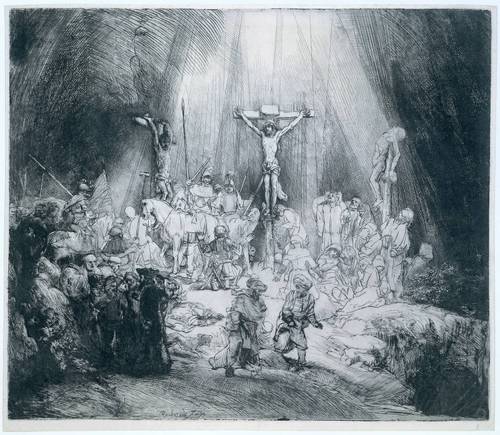
“When we are united to Christ a mysterious exchange takes place: he took our curse, so that we may receive his blessing; he became sin with our sin, so that we may become righteous with his righteousness. . . . On the one hand, God declined to ‘impute’ our sins to us, or ‘count’ them against us, with the implication that he imputed them to Christ instead. On the other, God has imputed Christ’s righteousness to us. . . . We ourselves have done nothing of what is imputed to us, nor Christ anything of what is imputed to him. . . . He voluntarily accepted liability for our sins.”
John R. W. Stott, The Cross of Christ (Downers Grove, 1986), pages 148-149.
Faith Enough to Ask
Faith Enough to Ask from Kevin DeYoung's Blog
Faith is a humble confidence that Christ can do whatever he wills and will do whatever he promises. Which means that if we are people of faith we will ask Christ to do more than we dare to think possible.
Real faith is not self-righteous, arrogant, or presumptuous. But neither is it feeble and mealy-mouthed. We are never instructed to pray saying, “Dear Jesus, I’m sorry to bother you. You’re busy. You may not even be able to help. I’m not sure I have the right guy. You probably have more important people to attend to. But if you can, and if you don’t mind, and if you have a few moments, could you consider my problems?” Jesus loves gutsy faith much more than he loves safe faith. In fact, there is nothing Jesus likes more in the gospels than desperate people expressing their humble confidence that he can take care of anything. Just look at the woman with twelve year’s of bleeding, the Centurion with an ill servant, or the Canaanite lady with the sick girl. They all asked for much and Jesus praised them for it.
Obviously, there is a danger that we take these examples, isolate them from the rest of Scripture, and come away with a theology that says God will give us whatever we want, no matter what and no matter when. Such a theology flies in the face of Jesus’ experience in the garden, Paul’s experience with the thorn, and real life for everyone else. We should not think that faith guarantees all our dreams coming true here on earth.
But if presumptive faith is a danger, so is puny faith. Some of us, when it comes to prayer, are all humility and no confidence. We’ve stopped asking Jesus for anything, because we’ve stopped believing that he really can and really cares. We get cautious. And unrelenting caution often masks over cynicism, and cynicism is a close cousin to unbelief. The hows and why of prayer can be a mystery at times, but if there is one thing we know about prayer for sure it’s that Christ wants us to pray. There is nothing he teaches more repetitively about prayer than simply “ask.” Jesus wants us to pray and not give up. He wants us to ask and keep asking. Christ loves to see bold, gutsy faith, what Ben Patterson calls “holy chutzpah.”
Have we lost all confidence in Christ? Do we only ask him for sure bets and safe things? Has our faith gotten so meek that it’s hardly even faith anymore? The men and women in the gospels most pleasing to Jesus are those who completely distrust their own piety and worthiness, but at the same time trust him to the uttermost.
Too often we ask for only small things. We except an even smaller response. True, God wants us to be a plodding people who do not neglect the days and years of small things. But God does not want us to be a people of small faith. We worship a Christ who can do miracles upon miracles. He healed the sick, cast out demons, walked on water, raised the dead. He can do whatever he pleasess. And it pleases him when we demonstrate our confidence in that ability by asking him to work on our behalf. For his glory, of course. In keeping with his will, always. Understanding that his ways are not our ways, absolutely. But asking often and with confidence. We do not have true faith unless we have true prayer. And we do not truly pray unless we ask for that which only God can do.
O Lord, we believe, help our unbelief.
Real faith is not self-righteous, arrogant, or presumptuous. But neither is it feeble and mealy-mouthed. We are never instructed to pray saying, “Dear Jesus, I’m sorry to bother you. You’re busy. You may not even be able to help. I’m not sure I have the right guy. You probably have more important people to attend to. But if you can, and if you don’t mind, and if you have a few moments, could you consider my problems?” Jesus loves gutsy faith much more than he loves safe faith. In fact, there is nothing Jesus likes more in the gospels than desperate people expressing their humble confidence that he can take care of anything. Just look at the woman with twelve year’s of bleeding, the Centurion with an ill servant, or the Canaanite lady with the sick girl. They all asked for much and Jesus praised them for it.
Obviously, there is a danger that we take these examples, isolate them from the rest of Scripture, and come away with a theology that says God will give us whatever we want, no matter what and no matter when. Such a theology flies in the face of Jesus’ experience in the garden, Paul’s experience with the thorn, and real life for everyone else. We should not think that faith guarantees all our dreams coming true here on earth.
But if presumptive faith is a danger, so is puny faith. Some of us, when it comes to prayer, are all humility and no confidence. We’ve stopped asking Jesus for anything, because we’ve stopped believing that he really can and really cares. We get cautious. And unrelenting caution often masks over cynicism, and cynicism is a close cousin to unbelief. The hows and why of prayer can be a mystery at times, but if there is one thing we know about prayer for sure it’s that Christ wants us to pray. There is nothing he teaches more repetitively about prayer than simply “ask.” Jesus wants us to pray and not give up. He wants us to ask and keep asking. Christ loves to see bold, gutsy faith, what Ben Patterson calls “holy chutzpah.”
Have we lost all confidence in Christ? Do we only ask him for sure bets and safe things? Has our faith gotten so meek that it’s hardly even faith anymore? The men and women in the gospels most pleasing to Jesus are those who completely distrust their own piety and worthiness, but at the same time trust him to the uttermost.
Too often we ask for only small things. We except an even smaller response. True, God wants us to be a plodding people who do not neglect the days and years of small things. But God does not want us to be a people of small faith. We worship a Christ who can do miracles upon miracles. He healed the sick, cast out demons, walked on water, raised the dead. He can do whatever he pleasess. And it pleases him when we demonstrate our confidence in that ability by asking him to work on our behalf. For his glory, of course. In keeping with his will, always. Understanding that his ways are not our ways, absolutely. But asking often and with confidence. We do not have true faith unless we have true prayer. And we do not truly pray unless we ask for that which only God can do.
O Lord, we believe, help our unbelief.
Subscribe to:
Posts (Atom)